INDEPENDENT PRODUCT / AI + LIVE MUSIC
A backing band.
The performer stays in charge.
Ghost Band turns real-time AI accompaniment into an experience a solo musician can guide mid-song—from arrangement and sections to foot control and an immediate stop.
Explore the project on GitHubA live musician needs freedom to repeat a chorus, change intensity, or stop the band immediately. An AI accompaniment system must preserve that control.
An independent product connecting the performance interface, arrangement model, MIDI controls, and generated audio. The supplied screens show the design; the repository documents the implementation.
Keep the musician’s voice and guitar outside the AI signal path, with dedicated foot controls and an independent panic fade for the accompaniment.
The repository reports real-time generation on Apple M2 Pro at 17.17 ms per 40 ms frame. That demonstrates an audible prototype, not completed stage-readiness testing.
Freedom on stage needs predictable control.
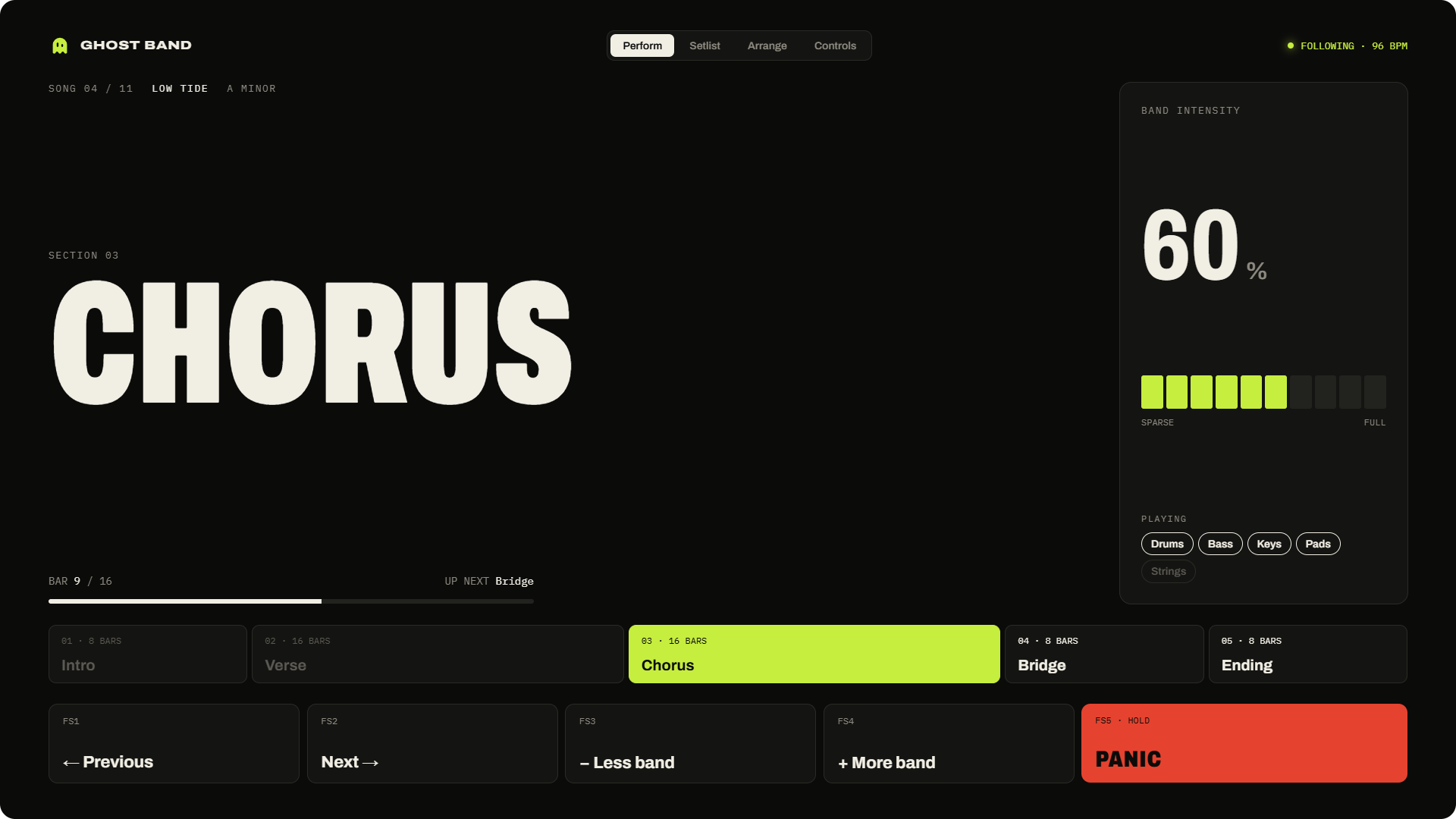
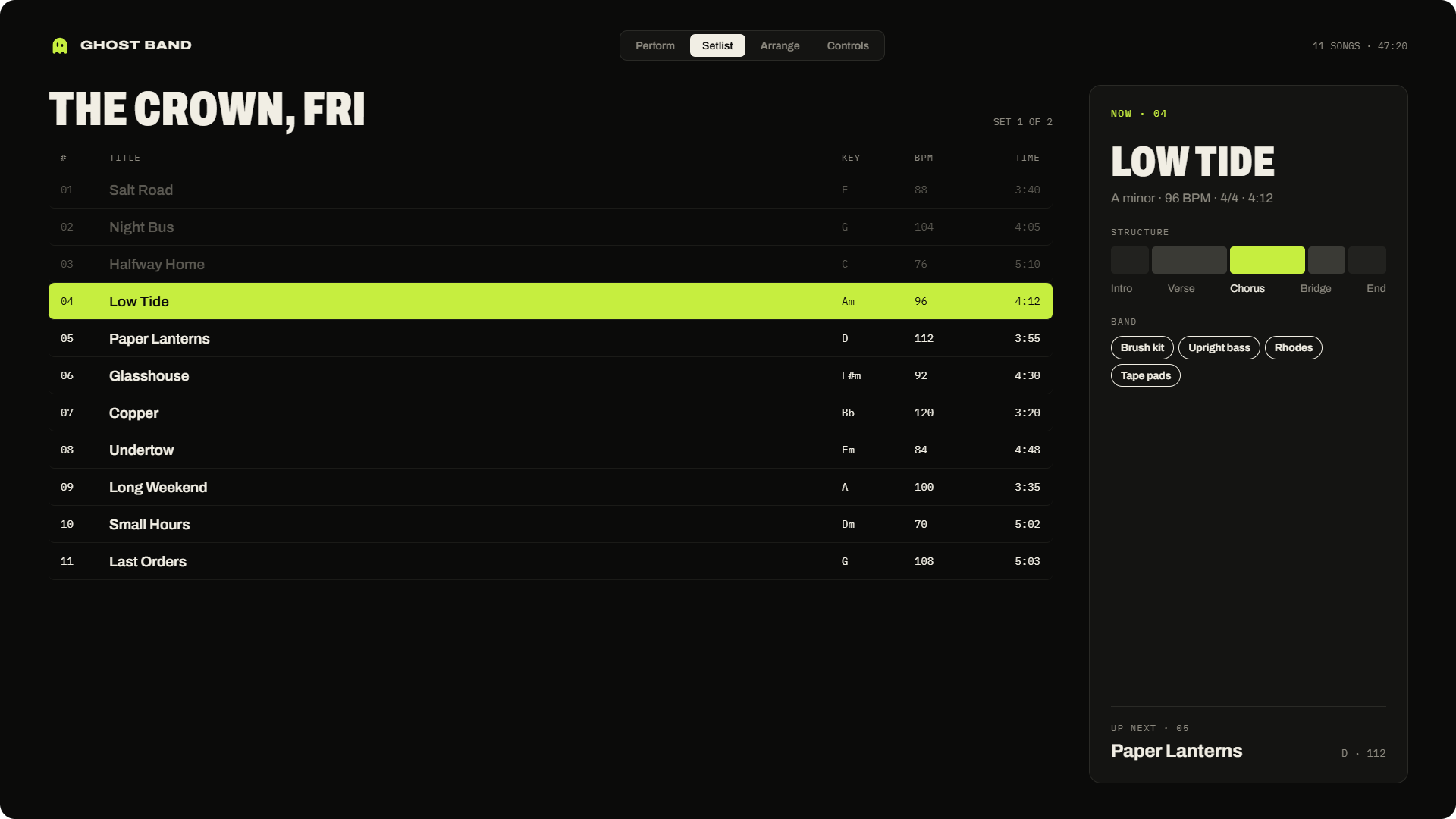
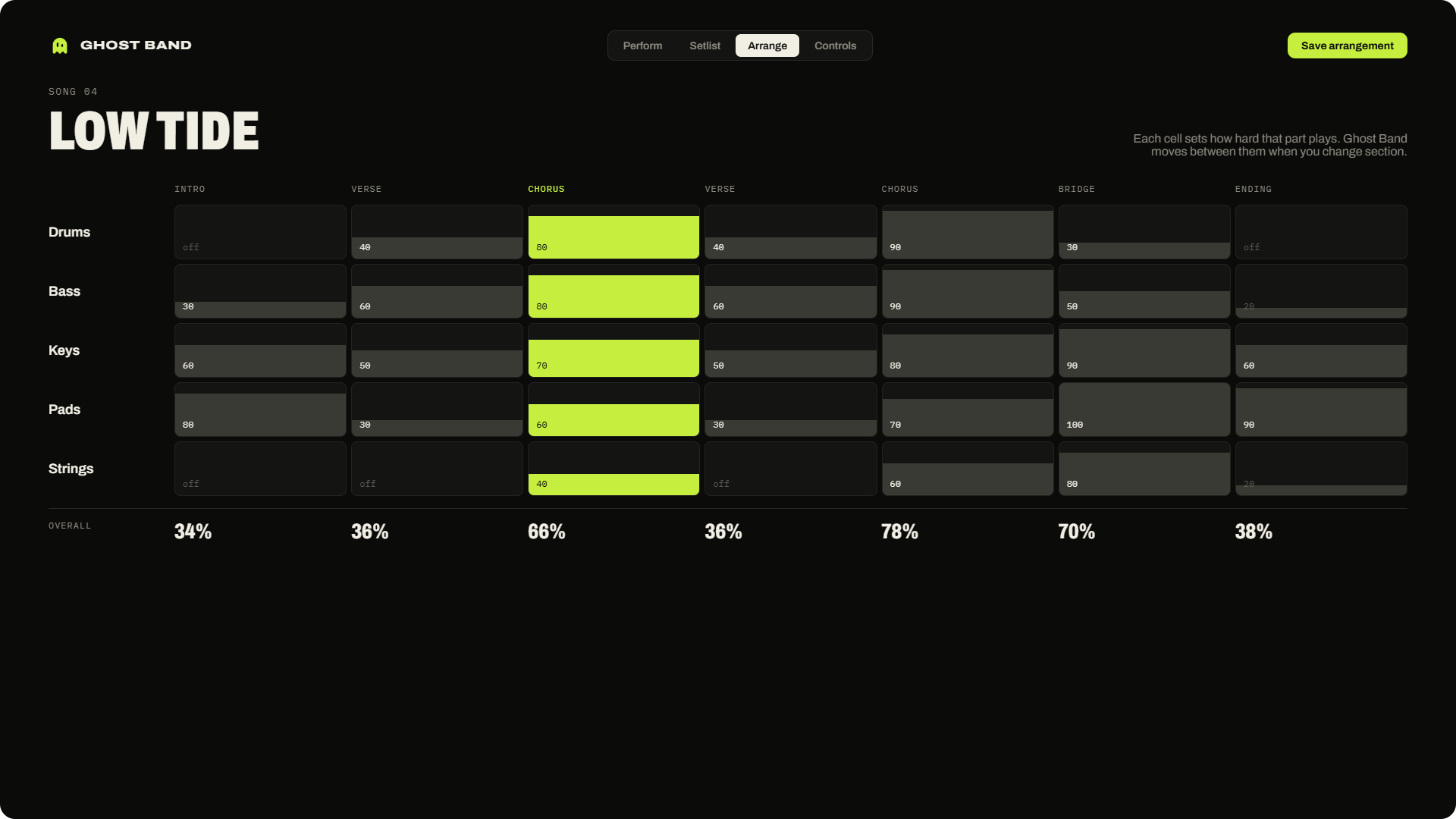
A musician may hold a chorus, drop the band back, or change the ending. Ghost Band uses Magenta RealTime 2 for accompaniment, but the experience has to make those choices feel immediate and legible. The design separates preparation—setlist and arrangement—from the controls needed during a performance.
Move the attention back to the performance.
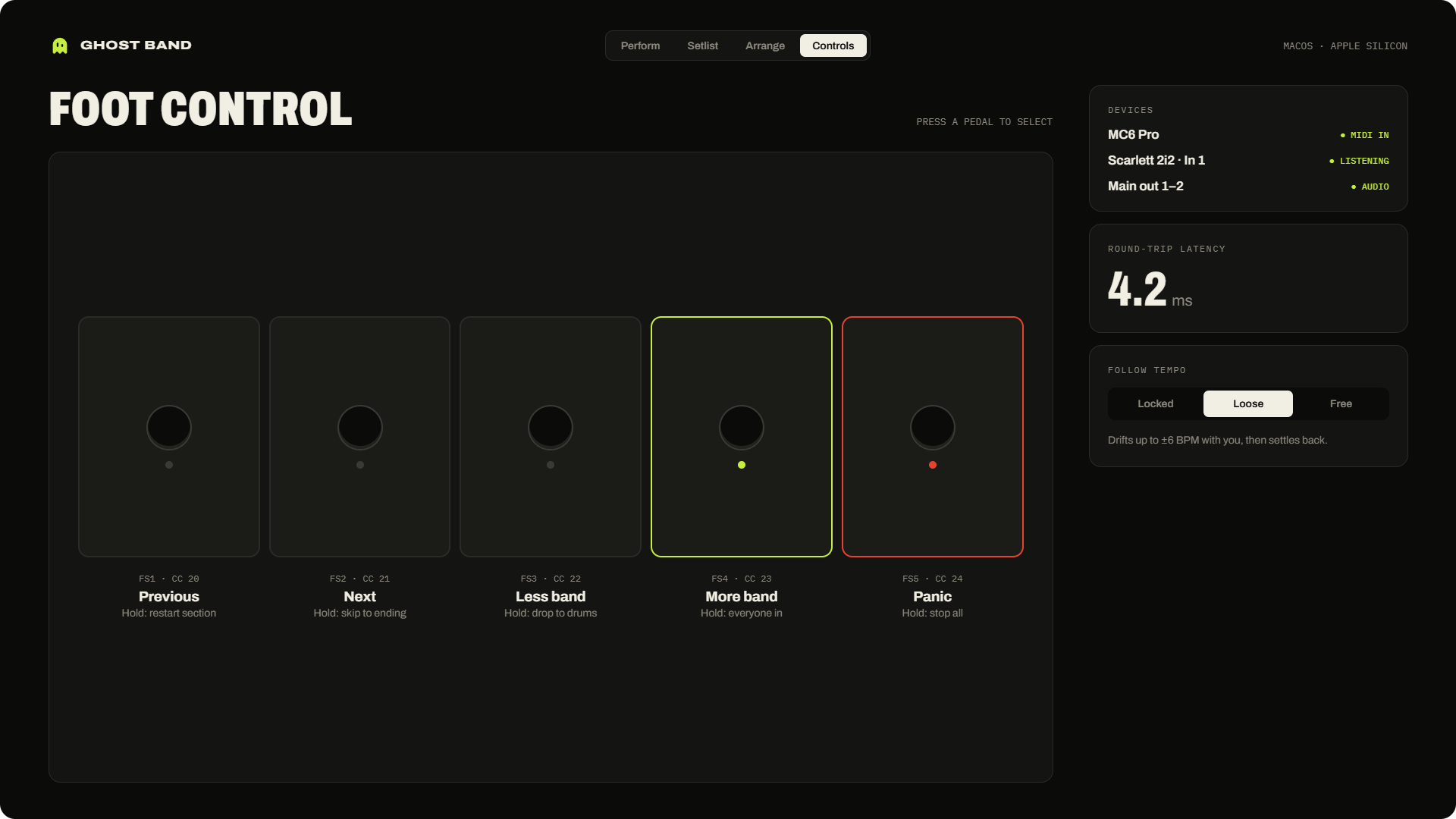
The current section dominates the Perform view. Foot controls map section changes, intensity, and panic to actions the musician can reach without the trackpad. Arrangement intensity remains separate from output volume, so “more band” describes the arrangement rather than simply making it louder.
The AI can stop. The show can continue.
Voice and guitar never route through Ghost Band. An independent panic fade gates the generated output, alongside a limiter and an underrun policy. The tradeoff is an additive accompaniment architecture rather than one surface controlling the entire live signal.
Audible on hardware. Still earning stage trust.
The repository reports 17.17 ms of generation per 40 ms frame on an Apple M2 Pro using the small MRT2 model. The portable safety core is built and tested. Long-running hardware tests and stage-readiness checks remain ahead; the supplied UI screens show design intent and do not establish that every visible control is production-validated.
Project details and reported results sourced from the README and architecture documentation.
Before the show.
During the moment.
A little ghost.
A musical signature.
The hem is a waveform. The eyes are two level meters, one louder than the other.